
From advice to implementation with Nobleo for a manageable and efficient production transition
Ensuring quality and efficiency in production relocation to Asia In February 2024, Bob started the Malaysia Transfer project at one of our clients as Project Manager. This project was designed with a clear goal: to create capacity within the client’s internal operations by moving production to sister companies in a more cost-efficient country. This required not only a smooth transition of production volumes, but also an approach where quality, cost, delivery and manufacturability were key.
A structured approach with deliverables and gatechecks
To carry out such projects successfully, a transfer programme specifically set up within Nobleo was used.
‘We worked according to a stage-gated process. This meant that the project was divided into clear stages, with each stage having a list of deliverables focused on quality, deliverability, cost and manufacturability (QLTC).’
Bob van Hedel – NPI engineer – Bob van Hedel – NPI engineer
With the use of gate checklists, the transfer remained manageable and predictable.
Although the project initially started without clear agreements with the customer, which created uncertainty, Nobleo soon implemented a structured approach. This approach emphasised concrete agreements, supported by the use of gate checks and a clearly defined process. As a result, expectations and responsibilities between all parties involved were clearly defined.
In addition, Nobleo introduced a systematic way of actively involving different management layers and project leaders in the process. ‘As a result of this approach, not only is there more clarity about steps to be taken, but everyone involved is now working from the same starting point,’ says Bob. This improved cooperation has led to a more efficient implementation of the project and ensures that everyone is on the same page.
From consulting to implementing: ensuring quality and manufacturability
One of the main challenges when moving production to ‘offshore’ locations is ensuring quality. To ensure quality, Bob not only advised on quality assurance, but also implemented measures to ensure production consistency. This included setting up processes and quality controls specifically for volume production in a new environment.
In addition, manufacturability was a key focus. By working closely with both engineering and production departments, Bob ensured that the designs were not only technically feasible, but could also be produced efficiently. Thanks to Nobleo’s close cooperation with the customer, the production process has recently been released for the first end products by the end customer. From 2025, the end customer will order directly from Malaysia.
Nobleo's unique approach in complex projects
In complex projects, such as the Malaysia Transfer Project, Nobleo’s strength is evident. Our approach combines operational progress with process optimisation and process capture, which is essential for successful implementation. What sets Nobleo apart is the combination of a hands-on mentality and process expertise. We not only help define and achieve clear project goals, but also ensure that these are aligned with the right stakeholders.
Bob sums it up quite accurately: ‘With our combination of operational and process expertise, we not only offer advice, but also realise concrete solutions that have an immediate impact.’ This makes us not only a reliable partner, but also an extension of the client’s team.
Interested in how Nobleo can support your organisation through complex transitions? Do not hesitate to contact us to learn more about our approach.
Achieving New Level Manufacturing together
I’m here to help you find the role that fits your talent and ambition.
Let’s Optimise Your Business!

Achieve higher quality standards with Failure Mode and Effects Analysis (FMEA)
With a background in Mechanical Engineering and a Master-Black Belt certificate, Erdal brings a fresh outlook to applying Failure Mode and Effects Analyses (FMEAs) for different industries. Transitioning from automotive to high-tech manufacturing, he gained valuable insights into driving ongoing improvements through systematic risk management. Erdal highlights our FMEA approach’s core principles, stressing the significance of thorough planning, preparation, and teamwork to ensure effective implementation.
The power and purpose of FMEA
Creating something new is always exciting, whether we are designing a new product or production process. But along with excitement comes uncertainty, or let’s say “risks”. It is crucial to pinpoint these risks and deal with them as early as possible before they happen and lead to nonconformities and serious consequences.
That is where FMEA comes in. It helps us to identify, evaluate the risks, and it structures the decision making on what to do with each risk based on the evaluation. Also, FMEA stands as a cornerstone in Concurrent Product and Process Development as it enhances the collaboration across diverse teams in the organization. By bringing together cross-functional teams early in the design phase, FMEA workshops could be considered as a medium to think about DfX (Design for Excellence).
FMEA in action
We approach FMEAs with a standard structured process, while also ensuring that the approach remains ‘tailorable’ to meet the specific needs of our customers. We believe that planning is the most significant part of the FMEA. Many companies tend to not spend enough time on planning and rush into the process. However, skipping or quickly executing the planning phase will decrease the effectiveness of an FMEA in terms of level of detail, team building, and total throughput time.
After the planning, we start to identify functions and their possible failure modes/causes and effects in workshops. When we have enough input on the risks, we evaluate each risk with a prioritization matrix based on severity, detectability, and occurrence rate. The prioritization matrix is the rationale behind the actions we are going to take. In almost all cases, we cannot decrease the severity of the failure, but we can detect or prevent it.
Thus, we determine the next actions with workshop sessions again and check with the prioritization matrix to make sure that the risk will be in the acceptable range. Finally, the actions are implemented, and the effectiveness of the actions must be checked.
“Currently, we are using FMEA with a customer who is developing a new product. Given the development phase, we conduct Design Failure Mode and Effect Analysis (DFMEA) and Process Failure Mode and Effects Analysis (PFMEA) simultaneously, to identify all potential risks they may encounter during the production of the product; before the drawings are released. We always tend to start dFMEAs in “conceptual design” phase and pFMEAs in “detailed design” phase latest.”
Erdal Demir – Process Improvement Consultant & Quality Manager – Erdal Demir – Process Improvement Consultant & Quality Manager
Nobleo Manufacturing's value proposition
“When engaging in an FMEA with a customer, we adopt a collaborative approach. Upon project completion, the customer should possess the competence to conduct FMEA autonomously. Nobleo Manufacturing’s added value lies in our structured problem-solving approach. While organisations may devise alternative problem-solving methods, they risk wasting time. We offer a standardized approach, fortified by experience and benchmarks, thereby guiding customers on the appropriate level of detail in FMEA. External facilitation prompts innovative risk analysis, encouraging stakeholders to think beyond normal boundaries. FMEA is a tool that can be used across various industries to ensure the quality of product designs and production processes.”
Through teamwork and careful analysis, our Nobleo Manufacturing team helps customers anticipate and tackle potential problems early on. This is based on a systematic prioritization and prevents costly setbacks. In our role as facilitators and experts, we highlight our dedication to developing internal expertise within our customers’ organisations, empowering them to lead FMEA independently.
By effective use of the FMEA , Nobleo Manufacturing enhances the customer’s quality, helps to improve their ability to better identify risks, and enable them to Achieve New Level Manufacturing!
Achieving New Level Manufacturing together
I’m here to help you find the role that fits your talent and ambition.
Let’s Optimise Your Business!
Nobleo Manufacturing and Nobleo Technology are joining forces in Design House+
Introducing Design House+: a new perspective to develop smart ideas into (high) volume production. Explore how we merge design expertise with manufacturing knowledge to ensure quality and unburden you from A to Z.
What is Design House+?
Design House+ is a completely new proposition. It all came to life due to the need for a complete “one-stop-shop” without restrictions in production facilities/supply chain. Let’s put it like this: on one hand you have pure design houses and on the other hand, you have parties who are more focused on design for manufacturing in their own facilities. With Design House+ we are combining high-tech specialism in the domain of embedded software, mechatronics and mechanics with our know-how of NPI, and manufacturing and value chain optimization. Here we simply don’t follow a ‘black box’ way of working – transparency, co-creation and true partnerships are what we believe in.
Currently, the concept has mainly been proven in the semiconductor industry, but Design House+ offers potential to many more markets. SMEs can also benefit from the expertise of Design House+. It is precisely because of the intensive collaboration and co-creation that the concept is suitable for companies of all sizes.
From an idea that exists on paper to a tangible, reproducible product that is ready for volume production. That’s what we do. By doing so, we are able to support or take ownership in high-tech product- and process development, starting in the earliest stage of the V-Model; from creating a first proof-of-concept or functional model, via prototyping and testing to full industrialisation.
This means not only working with the customer from initial specifications through proof-of-concepts and prototypes, but also in setting up a tailor-made supply chain, realizing NPIs projects and scaling up to volume production. We want to unburden the customer, from A to Z.
New approach to supplier engagement
Design House+ takes a new approach to supplier engagement. Finding a supplier and setting up the supply chain happens at an early stage. Critical to Quality aspects are identified and suppliers are then involved early in the development process, creating close collaboration that contributes to the successful completion and delivery of the product. This means more investments are made to prevent ‘cost of non-conforming’ once the product has been industrialised.
Our approach
We are driven by a commitment to transparency and collaboration. Our foundation is built on four pillars. These values define us in who we are and what we do.
- Transparency and Customer Engagement: A crucial aspect is transparency and open communication with customers. Where we understand the importance of customer involvement throughout the project.
- Early Supplier Involvement: Suppliers are involved early in the development process, creating close collaboration that contributes to the successful completion and delivery of the product.
- Project management: It is a bit of a no-brainer, yet still one of the most important aspects for a successful project. We like to be transparent about the project stages that we are in. We do this by working with a ‘stage gated’ project approach, this way we ensure that everyone is aware of project developments.
- Synergy: It is all under our roof, industrial and design engineers are side by side actively working together.
Wondering how this approach could work for your business? Contact us, we’d love to explore it with you.

Let’s Optimise Your Business!
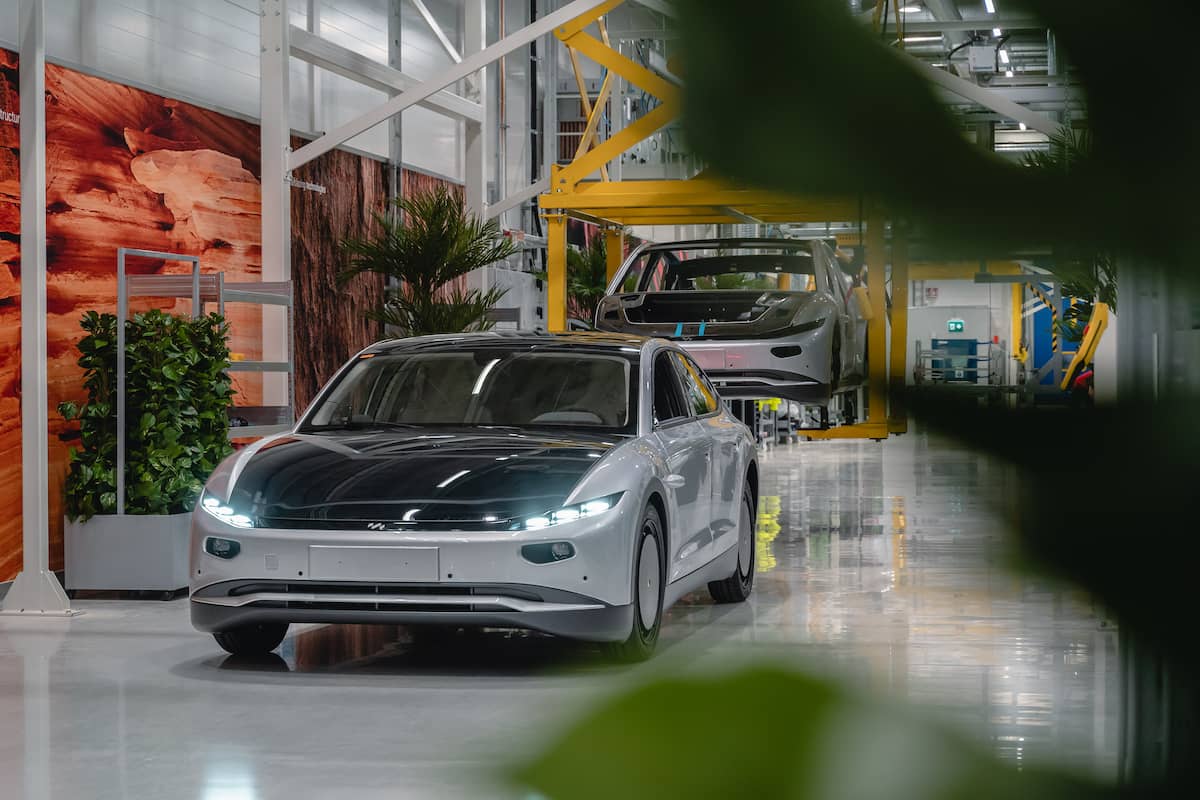
Introducing: project Design & Deliver at Lightyear by Stijn Totté
We would like to introduce you to Stijn Totté, who works as a Process Improvement Consultant at Nobleo Manufacturing and teaches Operational Excellence at Fontys University of Applied Sciences. This combination brings together practical experience and theory.
About Stijn
At Fontys University of Applied Sciences, my work primarily focuses on teaching Operational Excellence to third-year students in the Industrial Engineering & Management specialization of the Industrial Engineering & Management program. Along with a fellow instructor, I am constantly working on improving the Operational Excellence course by introducing and implementing new work methodologies, literature, and best practices. All of this contributes to equipping students with the latest theories in the field of Operational Excellence.
Currently, my work at Nobleo Manufacturing involves multiple industrialization projects for clients in the Automotive and High-Tech industries. Within the project teams, we follow Nobleo’s Design & Deliver methodology. I will briefly highlight one project that I am executing at Lightyear.
About Ligthyear
Lightyear aims to bring their first solar-powered car to the market in 2022. Their mission is to achieve clean mobility for everyone, everywhere! In this project, I have the role of industrialization project leader and support Lightyear on their path towards the start of solar panel production, which will take place in the Netherlands. It is incredible to be part of Lightyear’s journey towards clean mobility and to contribute with our methodology, experience, and expertise!
Combination
The combination of primarily working in the business environment and part-time teaching enhances my knowledge of the subjects I teach to students. At the same time, it keeps me up to date with new work methodologies and literature within Operational Excellence. Every day, I grow personally and share the acquired knowledge, experience, and best practices.
Wondering how this approach could work for your business? Contact us, we’d love to explore it with you.
New product logistics
The organisation supplies mechatronic modules for high tech OEM companies. They are the first-tier partner for companies within the industries for semiconductors, analytical instruments, and medical systems with global operations.
Objective
A major client has a new product to increase serviceability & upgradability for their cutting-edge technology. Time to market is crucial due to competition and pressing time constraints.
Company is currently at an early stage of the product development process because of Early Supplier Involvement (ESI) with their client. Thus, the project has been in a realization phase for the New Product Introduction (NPI) department and hardware should be ready within QLTC perspective for a certain time.
Approach
The concept TPDs were released and implemented gradually with engineering changes (EC). The main role of the New Product Logistics (NPL) Engineer was implementation of EC process and monitoring of this plan in the realization phase of the project.
At the beginning, determining and executing the project plan of logistic in cross sector project team was held to create a stable and regular environment for all parts in the Bill of Material (BOM). Therefore, co-operation with the procurement and material planning and co-ordinate material flow for critical, non-critical materials (packing, spare & tools) was accomplished. Further, analysing the supply chain impact of upcoming ECs for industrialization phase was done.
Result
The responsible production module has one of the highest complexities and longest BOM in the entire project with over 1000 unique parts and approximately 200 mono parts , highly supplier involved >50 suppliers.
‘’First time right’’ approach was implemented successfully and demand of the client was fulfilled. A safe logistic environment was created in order to meet the move rate. The transition from realization to industrialization phase of the project succeeded within time.
“Introduction of new product under time pressure was successful from a logistic perspective”
–
Wondering how this approach could work for your business? Contact us, we’d love to explore it with you.
Let’s Optimise Your Business!

NPI process design and execution
This organization develops, produces, assembles and tests complex (opto) mechatronic systems and mechanical modules for high-tech machine manufacturers (OEMs). As a first-tier systems supplier, they focus on companies active in markets with high levels of product diversity, low volumes and high complexity, such as the semiconductor, life sciences and digital printing markets, in which precision and maneuverability are paramount.
Objective
Industrialisation of various products for OEMs, which are key for the further miniaturization of the semiconductor industry and are under high pressure with regard to time to market. Furthermore, as a senior co-designing, supervising and implementing the NPI methodology in which a balance between processing time and care was required.
Approach and results
By using both the knowledge of first tiers and OEMs in the region, quick agreements on TPD, assembling processes and the supply chain were determined. Because the known networks were used, the balance between first tier and OEM was quickly found and the tension in the first tier was kept manageable. By deploying parallel supply chains, risks were eliminated and the OEM’s wishes were met. By using our experience, we have been able to shape the redesign of the NPI process, in which robustness of the process, risk mitigation and optimization of the lead time were balanced.
“Very rewarding to help a 1st tier supplier with a demanding customer.”
–
Wondering how this approach could work for your business? Contact us, we’d love to explore it with you.