
Improving load algorithms
A European Automotive company is producing two different models and applies small trains to load its assembly lines with components stored on pallets. These trains are filled at a central location in the plant, after which the pallets are transported to the assembly lines. The trains are filled in sequence based on the production sequence or order planning, the BOM and a load algorithm, which calculates when the pallets are empty and due to be replaced.
Assignment
We were requested to reduce logistical traffic of these trains to and from the assembly lines. This had to be achieved within the existing IT structure. Key condition was to reduce the number of trains and keep the load per train as close as possible to the maximum of 4 pallets.
Approach
We started with an analysis of the existing process by dissecting and understanding the load algorithm. This analysis resulted in a number of parameters with which we could influence the process. It appeared that almost all parameters were set at their default values. One parameter was set to always fully load the train with 4 pallets independent of their assembly line destination.
The load algorithm works as follows: it finds the most urgent (first empty) pallet and completes the train with 3 more pallets due to be brought to the line. Pallet content and number of pallets at the line determine how well the load algorithm can replenish the line in time.
Results
By dividing the assembly lines into zones and by balancing between them, pallets were classified in clusters. Trains were now directed to zones of the line, resulting in large reduction of distance and time travelled per train. Less trains could now bring the same amount of pallets to the line.
Python
The analysis has revealed the complexity of the present load algorithm. As an exercise we have written a new load algorithm in the programming language Python to see if we could simplify and improve it.
The advantages of this newly created algorithm was that we achieved better overview and now could anticipate loads. As a result the trains could be loaded more efficiently. In short we created a better dashboard with clear KPI’s and a much easier maintainable and understandable load algorithm.
Wondering how this approach could work for your business? Contact us, we’d love to explore it with you.

Let’s Optimise Your Business!
New automotive engine development
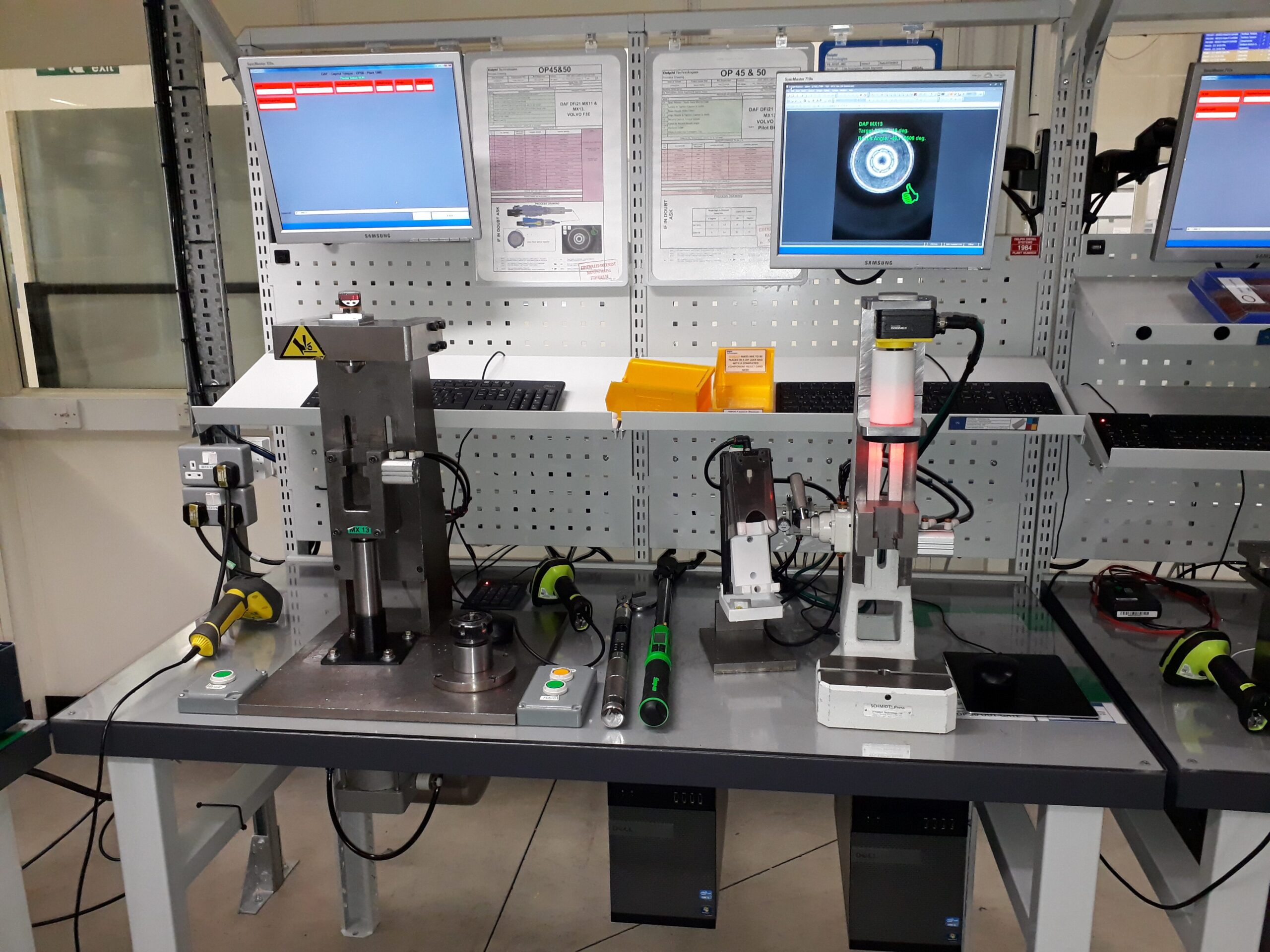
Our customer, a Dutch automotive OEM, is engaged to develop new engines for model year 21, where stricter emission legislation on global level sets high standards. This challenge also concerns suppliers involved in engine and fuel management systems.
Objective
One particular supplier is struggling to get the production of a vital fuel injection component up to speed at the desired quality standards. Considering the risk of meeting development deadlines, our customer has decided to form a dedicated team, where we have been requested to support in root cause analysis and process development.
Opportunities are to be found in:
- Measurement System Analysis of in-process measurements and specifically of the final functional test.
- Understanding relationships between Key Performance Variables and final test results.
- Improvement of critical component manufacturing and assembly steps where required.
Approach
Visits to the supplier facilities have provided insight in the critical pilot production process steps and in the way they have organised themselves to tackle the challenge at hand.
The following subjects have been addressed:
- Measurement System Analysis and observation of the final test show that this critical step is not in control. We have defined, discussed and proposed improvements, mainly in the execution and interpretation of test results.
- The assembly area and process did show insufficiencies with respect to 5S standards, product handling and standard work. Based on our recommendations, the supplier has brought final assembly up to standard on short notice.
- The component manufacturing lines also revealed issues with 5S standards and specifically with component traceability. We have created awareness with local management and supported traceability improvement, including external tier 2 suppliers.
- Together with the supplier engineering team we have increased understanding of Key Process Variables contributing to final product performance. This understanding has become the basis of fact based communication between supplier and OEM and has the potential to grow into a future process control plan.
- Root Cause Analysis at first appeared to be cumbersome due to the lack of data. After setting up structural retrieval of reliable data, and using a mix of Six Sigma and Shainin methodologies, correlations have been found which directly impacted defined problem areas.
Result
The intensive support of a supplier by this OEM might not be common, but appeared inevitable and in the end has proven successful. Final Yield has tripled in a short period of time and reached the level where the next phase of the industrialisation process can be entered in time.
Wondering how this approach could work for your business? Contact us, we’d love to explore it with you.

Let’s Optimise Your Business!
Data visualisation
An international operating warehousing company with various locations all over the world.
Project
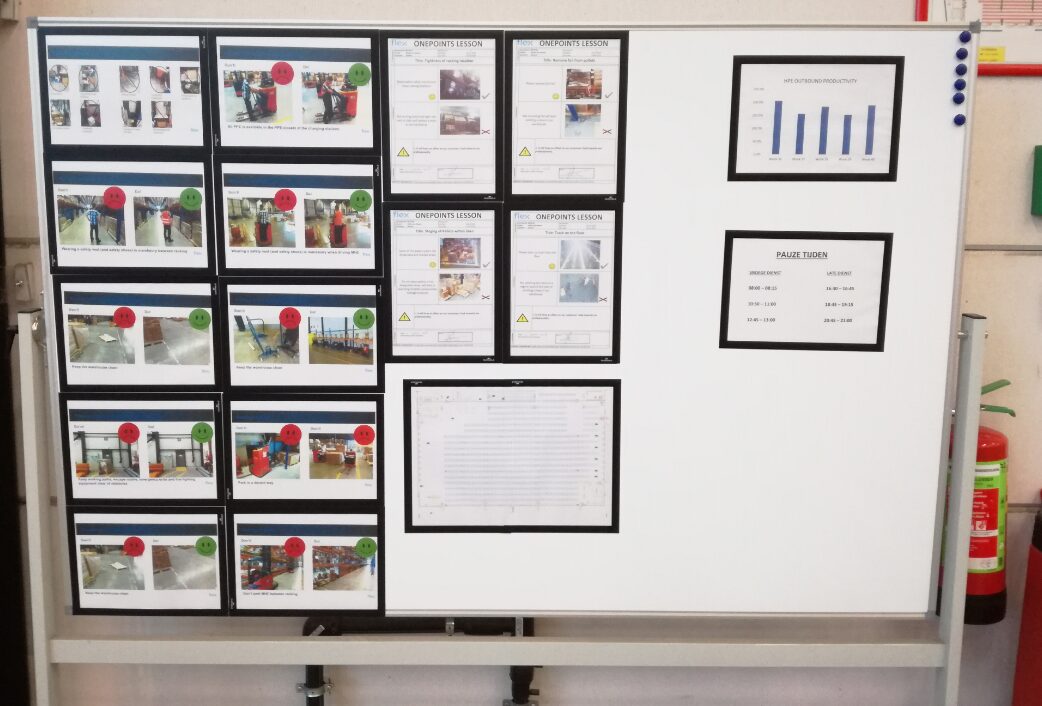
The Global Warehousing partner, where we carried out this project, had a varying number of departments for logistic assignments from their customers. Each department was different and dealt with reporting of Key Performance Indicators (KPIs) in their on way. The assignment was to provide structure and to present a clear solution to the Management.
Approach
Due to the large differences between the departments, it was important to gain insight into the existing reporting first. Not only in the KPIs itself, but the time intervals, format and the corresponding definition as well. Using this information, a selection of KPIs to be placed in a total overview and another selection for a department-specific overview were made.
During the project, major progress was made in the reporting of the departments and results were added to the overview in consultation. The managers of the departments were constantly involved in the interpretation and deployment of the overview. Towards the end, two internal employees were trained to update and send the file on a weekly basis so ownership was entirely shifted to the Global Warehousing Partner.
“I saw so many numbers that it made me dizzy, even for me that is a new experience”
Berend Steenhuisen – Program Lead Manufacturing Intelligence – Berend Steenhuisen – Program Lead Manufacturing Intelligence
Results
The delivery consists of a clear Excel file, which is updated and circulated weekly in a few minutes. It contains a sheet with a total overview such as productivity, illness absence, 5S score and inbound-, inventory- and outbound KPIs for each department. Each score is coded by performance with a color corresponding to target and trend. In this way, management has a quick overview of all departments’ performance. Currently the overview is manually filled by employees but this will be done automatically with the introduction of a Data WareHouse (DWH) in the near future. Hence, the overview can visualize live data instead of weekly snapshots.
There is also an option for zooming in on a specific department via buttons within the Excel file. With a single click, a department can get access to a more extensive overview that provides more KPIs with a further history and the option to view the underlying data and the calculation of scores. Weekly KPI scores of departments are made transparent by an untrained user through a deep dive without retrieving different systems and files.
Wondering how this approach could work for your business? Contact us, we’d love to explore it with you.
Let’s Optimise Your Business!
MES Integration
Our customer is global leader in the distribution, resale and compounding of commodity, engineering and specialty plastic and rubber polymers on behalf of petrochemical, construction and plastics industries.
Objective
We were requested to support a MES integration issue for 15 production plants in Europe. Two MES projects had already been started: one Wonderware project and a GE Proficy project. These MES solutions have been delivered with varying degrees of success. No integration with ERP has been included in the GE Proficy project. The Wonderware solution is fully integrated, but here the ERP system will be replaced by the company’s standard.
The main challenge was to keep the current MES systems running and integrate with the company’s ERP/IMS system, which is heavily under development. We also needed to deal with the factories that do not yet have a MES solution. The Wonderware implementation has been well executed and a high degree of automation has been achieved. In the GE implementation, ERP integration had no focus and this means that a solution had to be found. In addition, there are 13 factories, out of 15, without a MES solution in place.
Approach
Our approach was based on the ISA95 automation integration model and had both implementations positioned in it. From here a MES concept has been developed that provides a situation for factories both with and without MES. In the plants with a MES solution, an ISA95 based interface with ERP will be developed. The non-MES plants are, depending on the complexity, provided with the Wonderware solution, or with a company standard (light) MES version yet to be developed.
Results
“The MES concept is tested in workshops on diverse processes in multiple European factories.”
Mario van Cann – MES architect – Mario van Cann – MES architect
The extensive MES integration project is in the engineering phase at the time of writing this document and the concept was tested with positive result in various workshops in the European factories.
I’m here to help you find the role that fits your talent and ambition.

Let’s Optimise Your Business!
The introduction of two new car models
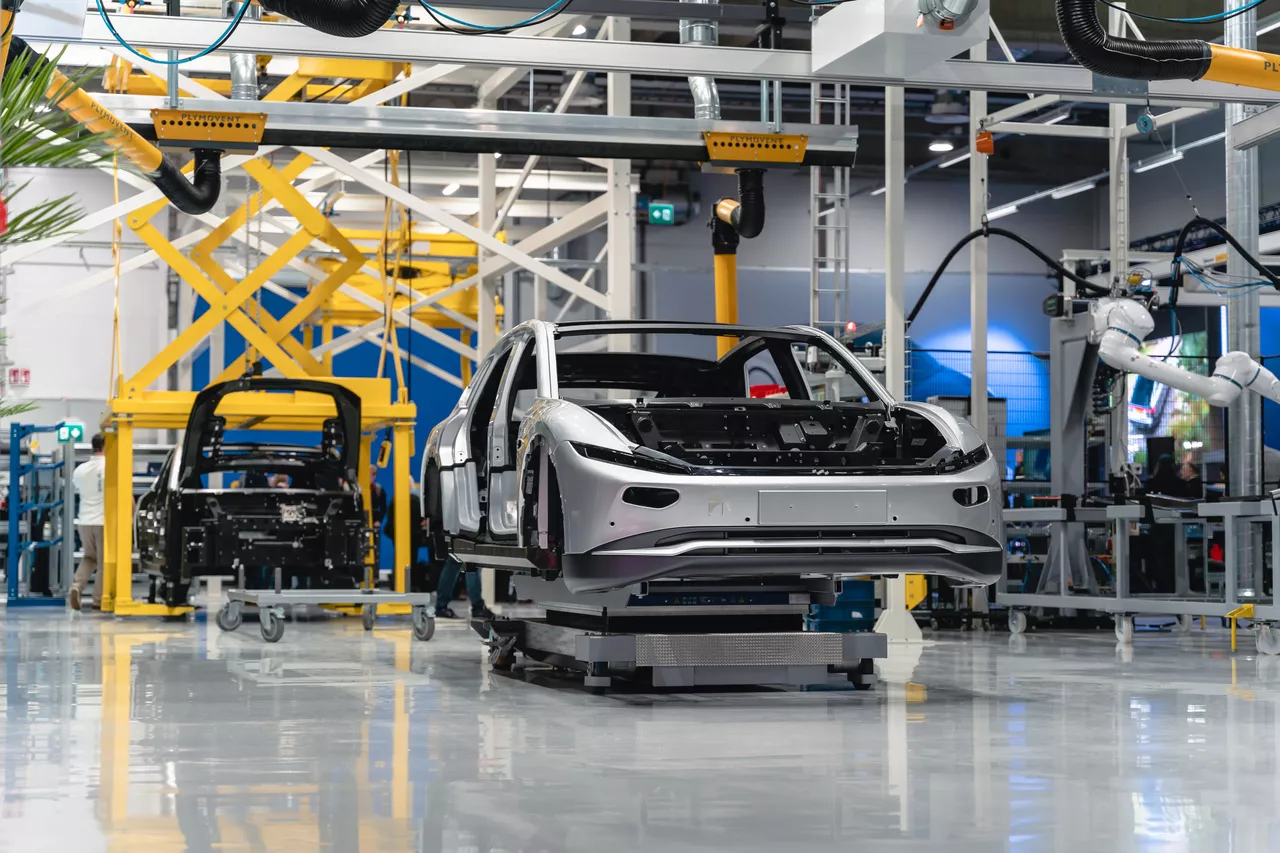
At this European automotive manufacturer, the first new model was launched in 2016 and the second new model was launched in 2017 for serial production on the same existing production line. This has led to an increase of complexity (due to variants) at lineside layout, an increase of complexity and frequency of line feeding to the production lines as well as an increase of square meter requirements due to a takeover of logistic areas by production and logistics requirements.
Objective
The key objective was to create a 2-step Logistic Structure Concept, a High Level Project plan and project structure with implementation for the growth of the logistic challenges mentioned above. To enable this, a multi-functional project team was created.
Approach
Peter was positioned as overall Project Leader in the Logistics Steering Committee, reporting directly to Senior Management. He has built a project team with members from the holding company, the assembly site and Nobleo Manufacturing. This team studied other plants from the holding company for reference.
Results
“Succesful launch of 2 new models on 1 production line.”
Peter Thissen – Technical director – Peter Thissen – Technical director
The first new model passed Start Of Production within the design requirements of the Logistic Structure Concept with new investments in equipment such as E-frames and IT such as Linefeeding software. The second new model passed Start Of Production within the design requirements of the Logistic Structure Concept with new investments in logistics infrastructure such as a Logistics Warehouse extension, the building of a new Small Box Warehouse and the implementation of a seat storage system.
Wondering how this approach could work for your business? Contact us, we’d love to explore it with you.